vivo X300 Pro: An In-Depth Review of its Imaging Capabilities
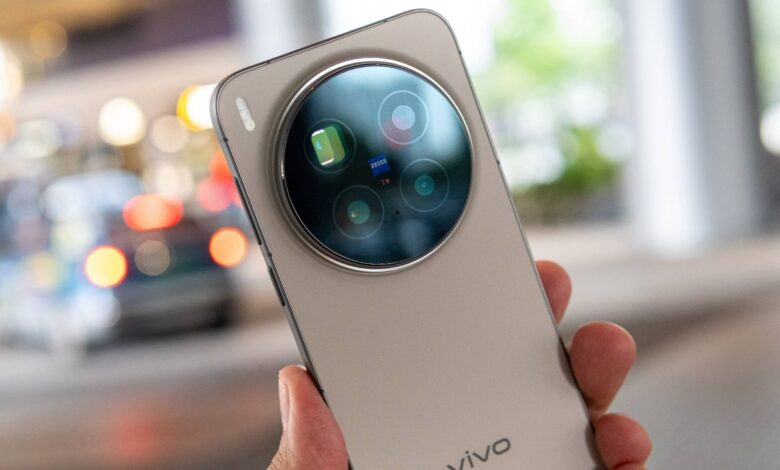
Following an extensive evaluation of the vivo X300 Pro during a recent photographic expedition to the Andalusia region of Spain, the device emerges as a formidable contender in the premium smartphone camera market. While lacking groundbreaking hardware innovations, the cumulative enhancements across its hardware, software, and supplementary accessories have yielded a highly capable and versatile imaging platform.


Key Strengths
Beyond the exemplary image quality achieved, the maturity and sophistication of the camera software are notable. The user interface is well-organized, responsive, and replete with advanced features.
Customization options extend beyond conventional color presets, allowing users to fine-tune brightness, saturation, contrast, and sharpness, establishing these adjustments as the new default settings in Auto mode.
Furthermore, users can modify the High Dynamic Range (HDR) effect for a more traditional, high-contrast image aesthetic, akin to that of a dedicated digital camera.
The “Street Photography” mode provides a specialized interface for capturing candid moments in urban environments.
A critical aspect of the device’s performance is its consistently accurate exposures and autofocus capabilities. The camera excels at recognizing and focusing on human subjects and pets, utilizing a Smart Focus feature that allows users to maintain focus tracking on a subject with a double-tap.
The integrated photo editing suite is equally refined. The Gallery application features an intuitive text extraction tool.
Additional features include the capability to process document images and generate multi-page PDFs or PPT presentations, proving particularly useful for professional applications such as document management.
The AI Eraser functionality proved effective, particularly in removing distracting elements in crowded tourist areas. Within the cleanup tools, “Smart Circle” yielded superior results compared to “Remove People,” which, although faster at multiple-object selection, often resulted in visual artifacts.
The optional Professional Camera Grip significantly enhanced the user experience. The grip’s integrated shutter key facilitated rapid, one-handed operation. The ergonomic design streamlined the photographic workflow, akin to that of a compact camera.
Moreover, the utilization of a 62mm UV filter and a circular polarizer with the provided screw-on mount further augmented the camera’s capabilities, producing results comparable to those achieved with dedicated camera systems.
Focal Length Cheat Sheet
- 15mm – Ultrawide (0.6x)
- 24mm – Main Camera (1x)
- 36mm – Main Camera (1.5x)
- 48mm – Main Camera (2x)
- 85mm – Telephoto Camera (3.5x)
- 121mm – Telephoto Camera (5x)
- 135mm – Telephoto (Portrait Mode Preset)
- 242mm – Telephoto Camera (10x)
[Insert Image Gallery Here, with focal lengths listed in each caption]
The integrated display panel provides accurate color rendering, with impressive saturation and contrast, enhancing the visual impact of captured images.
Limitations
The primary limitation encountered during testing was battery endurance. With consistent utilization of navigation applications, camera functions, and social media platforms, the device’s battery depleted rapidly, typically requiring recharging by early afternoon. Despite performing comparably to other flagship devices, the X300 Pro necessitates the use of a portable power source or fast charger for sustained daily use. While the optional grip’s supplemental battery provided additional operational time, it did not significantly alleviate this constraint.
Furthermore, while the autofocus system proved effective with human subjects and pets, its performance with avian subjects was inconsistent.
Finally, the effect of the circular polarizer used with the screw-on mount was less pronounced than with interchangeable-lens cameras, likely due to the off-center placement of the phone’s lenses, which may hinder the full impact of the polarizing effect.
Conclusion
Despite these minor drawbacks, the vivo X300 Pro provides a cohesive and compelling imaging experience. Its combination of high-end camera modules, optimized focal lengths, refined software processing, optional camera accessories, and editing capabilities position it as a leading smartphone camera available.
For users prioritizing mobile photography and seeking a purpose-built device, the X300 Pro is a strong recommendation, despite its limited battery life and market availability.